An arrest warrant in Riverside County, CA, is a legal document issued by a judge or magistrate that authorizes law enforcement to arrest a person suspected of committing a crime. These warrants are created only after evidence is presented to the court and a judicial officer determines there is probable cause. Once signed, the warrant becomes active and allows police to detain the individual named in the document. If the person cannot be located or arrested, the warrant remains outstanding until the subject is taken into custody, posts bail, or surrenders voluntarily. Riverside County maintains multiple systems for tracking active, bench, felony, and misdemeanor warrants, all managed through official sheriff and court databases.
Conducting a Riverside County, CA arrest warrants search gives individuals the ability to verify if they or someone else is subject to an active warrant. This process is essential for legal compliance, employment background checks, personal safety, and court-related matters. The county provides both online tools and phone-based services to access warrant information. However, users must follow precise steps and use correct field inputs to retrieve accurate data. Results typically include the subject’s full name, date of birth, charge details, warrant type, issuing court, and bond amount. Knowing how and where to search ensures timely and reliable access to public safety records maintained by Riverside County law enforcement and judicial agencies.
Official Riverside County Warrant Search Tools
Riverside County provides several official government tools to search for active arrest warrants, court-issued bench warrants, and inmate custody status. These records are maintained by law enforcement and the Superior Court to ensure accurate, real-time public information. Using official portals is the safest way to avoid outdated or misleading third-party websites. Below are the three primary official systems used for Riverside County warrant searches.
Riverside County Sheriff’s Warrant Search
The Riverside County Sheriff’s Department provides the most direct https://www.riversidesheriff.org/ way to check for active arrest warrants issued within the county.

How to Search:
- Open the official Riverside County Sheriff website
- Navigate to the “Services” section
- Select Warrant Information / Services
- Enter the person’s details:
- First Name
- Last Name
- Middle Initial
- Click Search
Search Results Include:
- Full Name
- Date of Birth
- Warrant Number
- Charge Description
- Issuing Agency
- Warrant Status
- Bond Amount
Best for checking active police-issued warrants
Riverside County Superior Court Case Search
Bench warrants are issued by the court when a person fails to appear https://www.riverside.courts.ca.gov/ or violates a court order. These are not always listed in sheriff databases, so a court search is required.

How to Search:
- Open the Riverside County Superior Court website
- Go to Online Services
- Select Case Information / Case Search
- Choose Criminal Case Type
- Enter the person’s full legal name
- Click Search
Results Show:
- Case Number
- Filing Date
- Charges Filed
- Court Department
- Case Status (including “Warrant Issued”)
- Upcoming Hearing Dates
Best for checking court-issued or bench warrants
Riverside County Jail Inmate Search
If a warrant has already been executed, the person may appear https://jimspub.riversidesheriff.org/ in the county jail system.
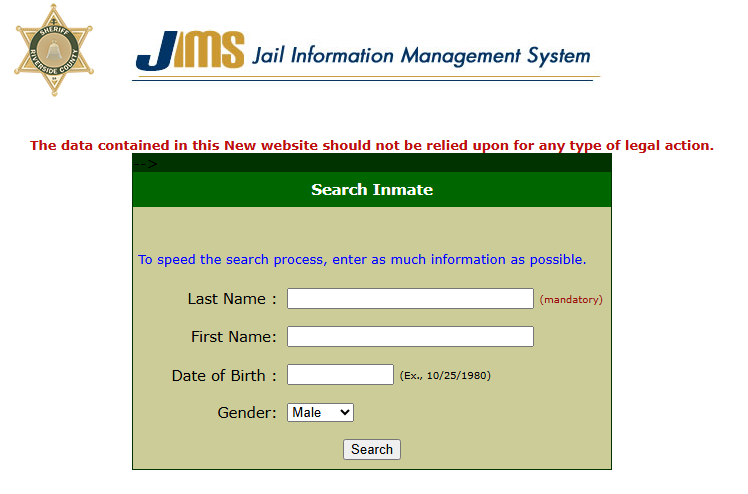
How to Search:
- Open the inmate lookup portal
- Enter the person’s full name
- (Optional) Filter by booking date
- Click Search
Search Results Include:
- Booking Number
- Inmate Name
- Arrest Date
- Facility Location
- Charges
- Bail Amount
- Release Status
Best for confirming recent arrests due to warrants
Types of Warrants in Riverside County
Riverside County issues several types of arrest warrants, each with distinct legal meanings and enforcement procedures. Knowing the difference helps users interpret search results accurately. Warrants fall into categories based on how they are issued, the severity of the offense, and the authority behind them. The most common types include bench warrants, felony warrants, misdemeanor warrants, and outstanding warrants. Each type appears in different databases and may require different search methods.
Bench Warrants
Bench warrants are issued by a judge from the bench—hence the name—when a person fails to comply with a court order. This includes missing a court date, violating probation, or ignoring a subpoena. These warrants do not require new evidence of a crime but are based on non-compliance with judicial directives. Bench warrants are common in both criminal and civil cases and remain active until the individual appears in court or resolves the underlying issue.
In Riverside County, bench warrants are recorded in the Superior Court’s case management system. They are not always listed on the Sheriff’s warrant search page. To find them, users must perform a criminal case search using the court’s online portal. Once located, the warrant status will show as “Active” or “Issued.” Law enforcement can arrest the individual at any time, including during traffic stops or home visits. There is no expiration date on bench warrants unless the court recalls them.
Felony and Misdemeanor Warrants
Felony warrants are issued for serious crimes such as robbery, assault, drug trafficking, or murder. These require a higher standard of probable cause and are typically investigated by detectives before a judge approves the warrant. Felony warrants often carry high bail amounts or no bail at all, depending on the charge and criminal history.
Misdemeanor warrants cover less severe offenses like petty theft, vandalism, or minor traffic violations that escalate due to non-compliance. Both types appear in the Sheriff’s warrant database and can be searched using name-based queries. The charge code (e.g., PC 484 for theft or HS 11350 for drug possession) helps identify the specific law violated. Riverside County treats felony warrants with higher priority, and individuals with active felony warrants may be arrested without warning.
Outstanding Warrants
An outstanding warrant is any arrest warrant that has not yet been served. It remains valid indefinitely until the subject is arrested, surrenders, or the court dismisses it. Outstanding warrants are not removed automatically and can affect employment, travel, or firearm purchases. In Riverside County, these warrants are actively pursued by law enforcement and may appear in statewide databases used during routine checks.
Having an outstanding warrant does not mean the person is guilty—only that a judge found enough evidence to justify an arrest. However, ignoring an outstanding warrant can lead to additional charges, such as failure to appear. The only way to resolve it is to contact the court or surrender to the authorities. Riverside County does not offer warrant amnesty programs, so individuals must address these matters through legal channels.
Phone-Based Warrant Verification Services
For those without internet access or who prefer verbal confirmation, Riverside County provides phone-based warrant verification through multiple divisions. These services allow individuals to confirm warrant status, inmate location, or background check procedures by speaking directly with staff. Each department handles specific types of inquiries, and calling the correct number ensures faster, accurate responses.
Warrant Division Hotline
The Riverside County Sheriff’s Warrant Division manages all active arrest warrants and can confirm their status over the phone. This service is available to the public and does not require legal representation.
- Dial (951) 955-2430 during business hours (Monday to Friday, 8:00 AM to 5:00 PM).
- Provide the full name and date of birth of the person in question.
- The operator will check the warrant database and confirm whether an active warrant exists.
- They may also provide the warrant number, charge, and issuing court, but will not disclose sensitive investigative details.
This line is intended for status checks only. It does not allow for warrant quashing or legal advice. For complex cases, callers are referred to the court or an attorney. Note that phone staff cannot look up warrants by Social Security number or address—only by name and DOB.
Inmate and Jail Information Lines
To verify if a warrant has led to an arrest, contact the jail where the person might be held. Riverside County operates five detention facilities, each with a dedicated phone line for public inquiries.
| Facility Name | Phone Number | Location |
| Blythe Jail | (951) 955-4500 | Blythe |
| Cois M. Byrd Detention Center | (951) 696-3050 | Indio |
| John J. Benoit Detention Center | (760) 863-8252 | Indio |
| Larry D. Smith Correctional Facility | (951) 922-7300 | Banning |
| Robert Presley Detention Center | (951) 955-4500 | Riverside |
Call the relevant facility and ask to speak with the records clerk. Provide the inmate’s full name and date of birth. Staff can confirm custody status, booking date, charges, and bail amount. They will not release medical or disciplinary records without a court order.
Records and Background Check Division
For criminal history or background check procedures, contact the Sheriff’s Records Division. They handle requests for arrest logs, police reports, and certified background checks used for employment or licensing.
- Call (951) 955-2440 between 8:00 AM and 4:30 PM, Monday through Friday.
- Explain the purpose of your request (e.g., employment, personal review).
- You may be asked to submit a written request with a fingerprint card for a full background check.
- Fees apply for certified copies, typically ranging from $25 to $50.
This division does not provide warrant status over the phone unless linked to a specific case. For general warrant checks, use the Warrant Division line instead.
Crime Statistics and Warrant Trends in Riverside County
Riverside County has experienced fluctuating crime rates over the past two decades, influencing the volume and type of arrest warrants issued. Analyzing these trends helps understand the context behind warrant activity and public safety efforts. Data from the Sheriff’s Department and court records show patterns in violent crime, property offenses, and warrant enforcement. These statistics are publicly reported and used to allocate law enforcement resources.
Annual Crime and Warrant Volume
In 2019, Riverside County recorded approximately 8,150 criminal complaints, slightly below the 2018 average of 8,350. Of these, over 7,200 were property crimes such as theft, burglary, and vehicle break-ins. Violent crimes—including assault, robbery, and homicide—accounted for nearly 1,000 cases. Each criminal investigation can lead to an arrest warrant if the suspect is not immediately apprehended. The high volume of property crimes contributes to a steady flow of misdemeanor warrants, while violent offenses generate felony warrants with longer enforcement timelines. From 1999 to 2008, the county reported over 650,000 crimes, with thefts making up 423,000 of those incidents. There were also 4,400 reported rapes and 800 murders during that period. On average, a crime was reported every eight minutes, totaling over 65,000 per year. While overall crime rose by 40% during this time, violent crime increased by only 13%, indicating a shift toward non-violent offenses. This trend affects warrant types, with more misdemeanor warrants issued for theft-related crimes.
Warrant Enforcement and Clearance Rates
Riverside County law enforcement actively pursues individuals with active warrants, especially for felony charges. The Sheriff’s Department conducts regular warrant sweeps, targeting high-priority offenders. In 2020, over 12,000 warrants were served across the county, with a clearance rate of approximately 68% for felony warrants. Misdemeanor warrants have a lower clearance rate due to resource limitations and lower priority. Bench warrants make up a significant portion of active warrants, often resulting from missed court dates. The Superior Court estimates that 30% of criminal cases in Riverside County involve at least one bench warrant. These are typically resolved when the individual appears in court, either voluntarily or after arrest. The court does not dismiss bench warrants automatically, even if the underlying case is resolved.
Impact on Public Records and Transparency
All arrest warrants in Riverside County are public records, accessible through official channels. This transparency supports accountability and allows individuals to verify their legal status. However, once a warrant is served or recalled, it may remain in historical databases unless expunged. The county does not delete warrant records after resolution, meaning past warrants can appear in background checks.
Law enforcement agencies publish weekly arrest logs and monthly crime reports, which include warrant-related activity. These documents are available on the Sheriff’s website and at courthouses. They provide insight into enforcement patterns and help residents stay informed about local safety conditions.
Legal Rights and Responsibilities Regarding Warrants
Individuals in Riverside County have specific legal rights and responsibilities when it comes to arrest warrants. Knowing these can prevent unnecessary arrests, protect constitutional protections, and ensure proper legal recourse. Warrants are powerful tools for law enforcement, but they must be executed within legal boundaries. Citizens have the right to know if a warrant exists and how to address it.
Right to Know About an Active Warrant
There is no legal requirement for law enforcement to notify a person that an active warrant has been issued. Warrants can be served at any time, including during traffic stops, home visits, or public encounters. However, individuals have the right to inquire about their warrant status using official search tools or by calling the Warrant Division. This proactive step can prevent surprise arrests and allow time to consult an attorney. If a warrant is found, the individual has the right to remain silent and request legal representation before speaking to law enforcement. Arresting officers must present the warrant upon request, though they are not required to do so before detention. In Riverside County, warrants are valid countywide and can be served by any law enforcement officer, not just the issuing agency.
Resolving an Active Warrant
The only way to resolve an active warrant is to appear before the court or surrender to authorities. Riverside County does not offer warrant forgiveness or automatic dismissal. Individuals can turn themselves in at any Sheriff’s station or courthouse, where they will be processed and taken before a judge. For bench warrants, the court may recall the warrant if the individual appears and explains the absence. For felony or misdemeanor warrants, arrest is likely, followed by a bail hearing. Bail amounts are set based on the charge, criminal history, and flight risk. Payment can be made in cash, through a bail bondsman, or via property bond. Failure to appear after release can result in additional warrants and higher penalties.
Expungement and Record Sealing
After a warrant is resolved and the case is closed, individuals may petition to have their records expunged or sealed under California law. Expungement removes the conviction from public view but does not erase the warrant history. Sealing is available for certain juvenile or dismissed cases. Riverside County Superior Court handles these petitions, which require filing forms, paying fees, and attending a hearing. Expunged records are not accessible through standard background checks, but law enforcement and courts retain access. Employers and licensing boards may still consider the offense in certain contexts. It is advisable to consult an attorney before pursuing expungement, as eligibility depends on the charge, sentence, and time passed.
| Department | Address | Phone | Hours |
| Riverside County Sheriff’s Department | 4095 Lemon St, Riverside, CA 92501 | (951) 955-2400 | Mon–Fri: 8:00 AM – 5:00 PM |
| Superior Court of Riverside County | 4050 Main St, Riverside, CA 92501 | (951) 777-3147 | Mon–Fri: 8:00 AM – 4:00 PM |
| Warrant Division | 4095 Lemon St, Riverside, CA 92501 | (951) 955-2430 | Mon–Fri: 8:00 AM – 5:00 PM |
(FAQs) About Riverside County, CA Arrest Warrants Search
This section provides clear answers to the most common questions about Riverside County arrest warrants, including how to check active warrants, what happens if one is issued, and how to resolve or cancel it. All information is based on official county resources to help you understand the process and take appropriate legal steps when needed.
How do I check if I have an active arrest warrant in Riverside County?
To check for an active arrest warrant in Riverside County, use the official Sheriff’s Department warrant search tool at http://www.riversidesheriff.org/services/warrants/. Enter your full first and last name in the designated fields and click “Search.” The system will display any matching records, including warrant number, charge, issuing court, and bond amount. You can also call the Warrant Division at (951) 955-2430 during business hours and provide your name and date of birth for verbal confirmation. For bench warrants, use the Superior Court case search portal and look for cases marked “Warrant Issued.” Always use official sources to ensure accuracy and avoid scams from third-party websites.
What happens if I have an outstanding warrant in Riverside County?
If you have an outstanding warrant in Riverside County, law enforcement can arrest you at any time, including during routine traffic stops or home visits. The warrant remains valid indefinitely until you are taken into custody, surrender voluntarily, or the court recalls it. Arrest may lead to detention, a bail hearing, and additional charges if you fail to appear in court. To resolve the warrant, turn yourself in at any Sheriff’s station or courthouse. You will be processed, and a judge will determine the next steps, which may include setting bail or scheduling a court date. Ignoring the warrant will not make it disappear and can worsen legal consequences.
Can I search for someone else’s arrest warrant in Riverside County?
Yes, you can search for someone else’s arrest warrant in Riverside County using public records tools. The Sheriff’s warrant search and court case lookup allow anyone to enter a name and view active warrants or criminal cases. However, you cannot access sealed, juvenile, or expunged records. Results are limited to publicly available information, such as name, charge, and court details. You do not need consent from the individual to perform a search. However, using this information for harassment, stalking, or illegal purposes is prohibited. Always respect privacy and use warrant data responsibly and lawfully.
How long do arrest warrants last in Riverside County?
Arrest warrants in Riverside County do not expire. Once issued, they remain active until the individual is arrested, surrenders, or the court formally recalls the warrant. This applies to bench, felony, and misdemeanor warrants. There is no statute of limitations on warrant enforcement, meaning law enforcement can act on a warrant years after it was issued. However, courts may dismiss warrants if the underlying case is resolved or if too much time has passed without action. Outstanding warrants can affect employment, travel, and firearm purchases, so it is important to address them promptly through legal channels.
Where can I get a copy of my criminal record or arrest history in Riverside County?
To obtain a copy of your criminal record or arrest history in Riverside County, contact the Sheriff’s Records Division at (951) 955-2440. You may need to submit a written request along with a fingerprint card processed at an approved live scan location. Fees typically range from $25 to $50, and processing takes 2 to 4 weeks. The report includes arrests, charges, dispositions, and warrant history within Riverside County. For statewide records, request a copy from the California Department of Justice. Note that expunged or sealed records may not appear on standard reports. Employers and licensing agencies often require certified copies for background checks.
Can a warrant be removed or canceled in Riverside County?
A warrant can only be removed or canceled by the court that issued it. Law enforcement cannot cancel warrants on their own. To request removal, you must appear in court and ask the judge to recall the warrant. This is common for bench warrants when the individual shows up voluntarily. For felony or misdemeanor warrants, the court may cancel them after arrest and case resolution. Expungement or dismissal of the underlying charge does not automatically remove the warrant from records—only a court order can do that. Always consult an attorney to determine the best legal strategy for warrant resolution.